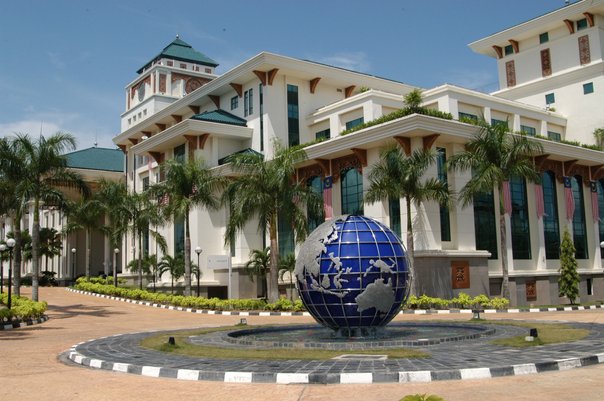
MANILA, PHILIPPINES, 1 April 2026 – Universiti Malaysia Terengganu (UMT) marked a significant milestone in advancing regional marine science collaboration through the signing of a Memorandum of Understanding (MoU) with the Mindanao State University Tawi-Tawi College of Technology and Oceanography (MSU TCTO). The ceremony, held at the Embassy of Malaysia in Manila and hosted by H.E. Ambassador Dato’ Abdul Malik Melvin Castelino, underscores a shared commitment to excellence in marine research and sustainable development within the Coral Triangle region.
At the signing ceremony, Universiti Malaysia Terengganu was represented by Professor Dr. Zainuddin Bachok, Director of the Institute of Oceanography and Environment (INOS), and Associate Professor ChM Dr. T N Sabiqah Tuan Anuar, Deputy Director of the International Centre, reflecting UMT’s strong institutional commitment to internationalisation and strategic academic partnerships.
Meanwhile, Mindanao State University was represented by MSU TCTO Chancellor, Professor Dr. Mary Joyce Z. Guinto-Sali (Chancellor), and Associate Professor Atty. Datu Esma Mikee P. Maruhom, JD (Vice Chancellor for International Affairs).
In his remarks, Prof. Dr. Zainuddin Bachok highlighted the strategic importance of the collaboration, noting that INOS- recognised as a Higher Institution Centre of Excellence (HICoE) by the Ministry of Higher Education Malaysia serves as the spearhead entity for this initiative. This prestigious recognition affirms UMT’s role as a national leader in oceanography and marine science, driving impactful and solution-oriented research.
“This MoU serves as a launchpad for broader cooperation, extending beyond oceanography to various research institutes and faculties within UMT,” he stated. The collaboration will leverage the unique geographical advantage of MSU TCTO, located in the Tawi-Tawi archipelago at the heart of the Coral Triangle, enabling high-impact research in marine biodiversity and ecosystem sustainability.
Universiti Malaysia Terengganu is widely recognised for its niche strengths in marine and aquatic sciences, fisheries and aquaculture, blue economy development, and renewable energy related to marine and coastal systems. Through this partnership, both institutions aim to integrate scientific excellence with regional priorities, particularly in sustainable resource management and climate-resilient coastal development.
Key highlights of the partnership include:
• Academic Exchange: Strengthening student and staff mobility, including postgraduate training, internships, and research attachments
• Research Collaboration: Joint studies focusing on blue economy, marine biodiversity, and sustainable marine resource management
• Regional Impact: Enhancing Malaysia–Philippines academic ties, particularly in the context of the Philippines’ ASEAN Chairmanship in 2026
About Universiti Malaysia Terengganu (UMT)
Universiti Malaysia Terengganu is a leading institution in marine and aquatic sciences, consistently recognised for its excellence in Marine and Freshwater Biology, where it ranks No. 1 in Malaysia and recognized globally. UMT’s multidisciplinary expertise spans oceanography, fisheries science, environmental sustainability, and marine-based renewable energy, positioning the university as a key driver in advancing the blue economy agenda at both national and regional levels.
As a Higher Institution Centre of Excellence (HICoE), INOS is Malaysia’s premier research institute dedicated to ocean science and environmental sustainability. It provides technological and scientific solutions through advanced marine monitoring, data modelling, and community-driven conservation initiatives.
The Mindanao State University Tawi-Tawi College of Technology and Oceanography (MSU TCTO) is a constituent campus of Mindanao State University, strategically located in the Tawi-Tawi archipelago within the Coral Triangle—one of the world’s most biodiverse marine regions. The institution plays a vital role in advancing education and research in marine science, fisheries, oceanography, and coastal resource management, with a strong emphasis on community engagement and sustainable development. Its unique geographic setting provides exceptional opportunities for field-based research and capacity building in marine biodiversity conservation and blue economy initiatives.