

Why is Chile such a hot spot for earthquakes?
Chile is known for the large number of earthquakes that they have each year. This is due to the fact that Chile is situated on the coast of the South American tectonic plate, which the Nazca plate frequently collides into.
When the Nazca plate hits the South American plate it is submerged underneath and a large pressure begins to form. When that pressure becomes too much, it is released and in turn triggers an earthquake.


Earthquake is a sudden, rapid shaking of the ground caused by the shifting of rocks deep underneath the earth’s surface. Earthquakes can cause fires, tsunamis, landslides or avalanches.
Prepare Before an Earthquake

- Practice Drop, Cover, and Hold On with family and coworkers.
- Make an Emergency Plan: Create a family emergency communications plan that has an out-of-state contact. Plan where to meet if you get separated. Make a supply kit that includes enough food and water for several days, a flashlight, a fire extinguisher and a whistle.
- Protect Your Home: Secure heavy items in your home like bookcases, refrigerators, televisions and objects that hang on walls. Store heavy and breakable objects on low shelves. Consider making improvements to your building to fix structural issues that could cause your building to collapse during an earthquake.Consider obtaining an earthquake insurance policy. A standard homeowner’s insurance policy does not cover earthquake damage.
Stay Safe During

- If you are in a car, pull over and stop. Set your parking brake.
- If you are in bed, turn face down and cover your head and neck with a pillow.
- If you are outdoors, stay outdoors away from buildings.
- If you are inside, stay and do not run outside and avoid doorways.
Protect Yourself During Earthquakes

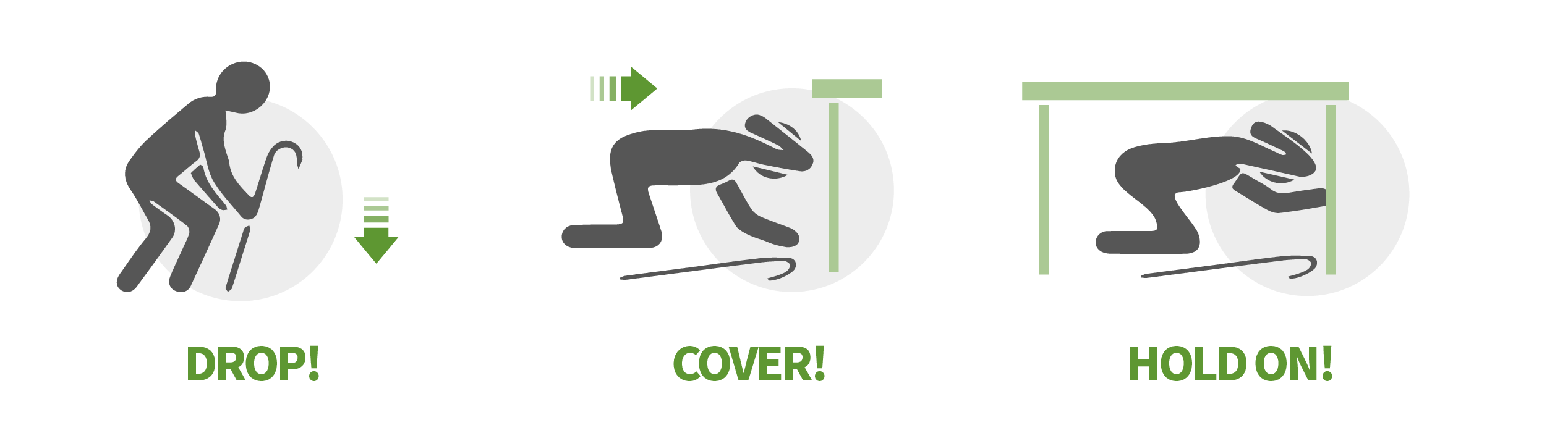
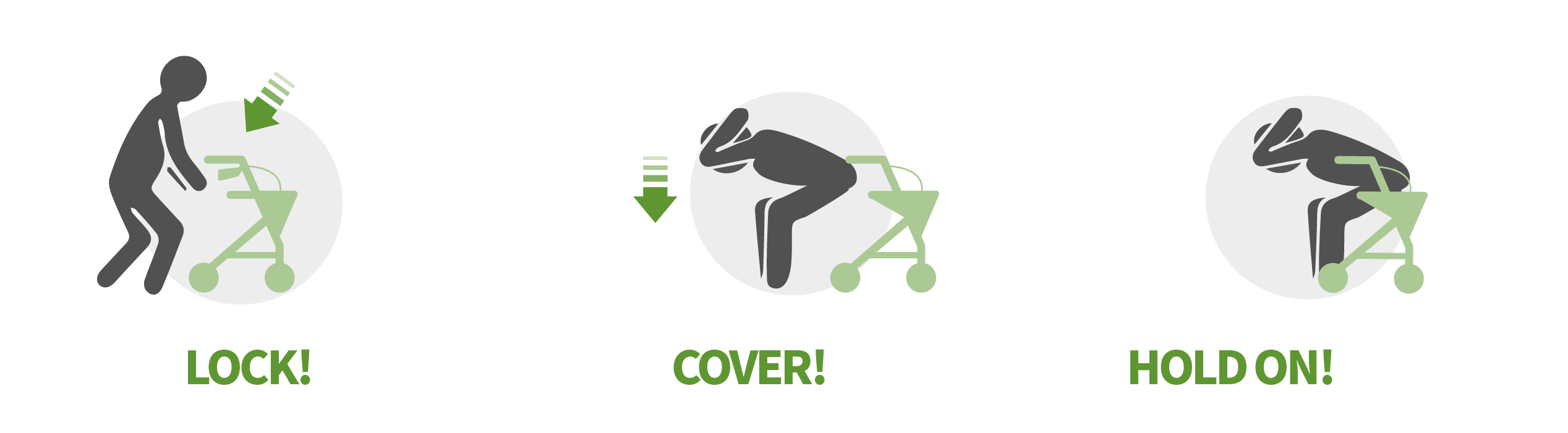
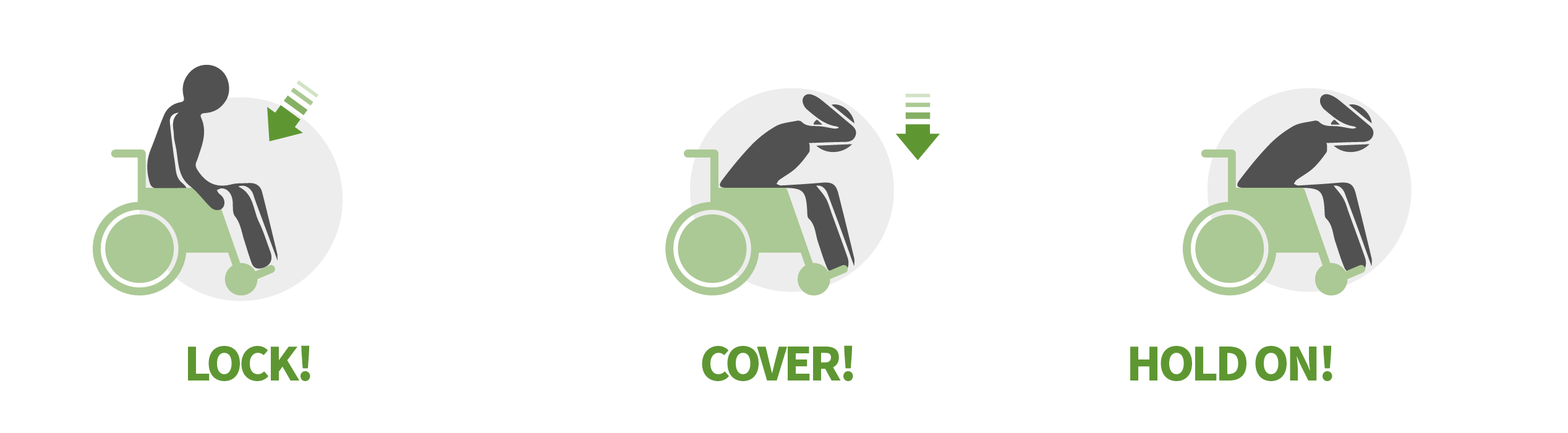
1. Drop (or Lock)
Wherever you are, drop down to your hands and knees and hold onto something sturdy. If you’re using a wheelchair or walker with a seat, make sure your wheels are locked and remain seated until the shaking stops.
2. Cover
Cover your head and neck with your arms. If a sturdy table or desk is nearby, crawl underneath it for shelter. If no shelter is nearby, crawl next to an interior wall (away from windows). Crawl only if you can reach better cover without going through an area with more debris. Stay on your knees or bent over to protect vital organs.
3. Hold On
If you are under a table or desk, hold on with one hand and be ready to move with it if it moves. If seated and unable to drop to the floor, bend forward, cover your head with your arms and hold on to your neck with both hands.
Using a Cane?
Using a Walker?
Using a Wheelchair?
Stay Safe After

- Expect aftershocks to follow the main shock of an earthquake. Be ready to Drop, Cover, and Hold On if you feel an aftershock.
- If you are in a damaged building, go outside and quickly move away from the building. Do not enter damaged buildings.
- If you are trapped, protect your mouth, nose and eyes from dust. Send a text, bang on a pipe or wall or use a whistle instead of shouting to help rescuers locate you.
- If you are in an area that may experience tsunamis, go inland or to higher ground immediately after the shaking stops.
- Check yourself to see if you are hurt and help others if you have training.

- Remember to register yourself with the nearest Embassy and update your status on your social media if you have so people will know you are okay.
- Use text messages to communicate, which may be more reliable than phone calls.
- Be careful when cleaning up. Wear protective clothing, including a long-sleeved shirt, long pants, work gloves and sturdy thick-soled shoes. Do not try to remove heavy debris by yourself.